What does a bank-owned sale look like?
When a commercial loan fails, the lender may take the property back through foreclosure or a deed in lieu of foreclosure. The industry calls that lender-owned property "REO," short for real estate owned. The lender, or a fund that bought the loan, then usually sells it to a new owner.
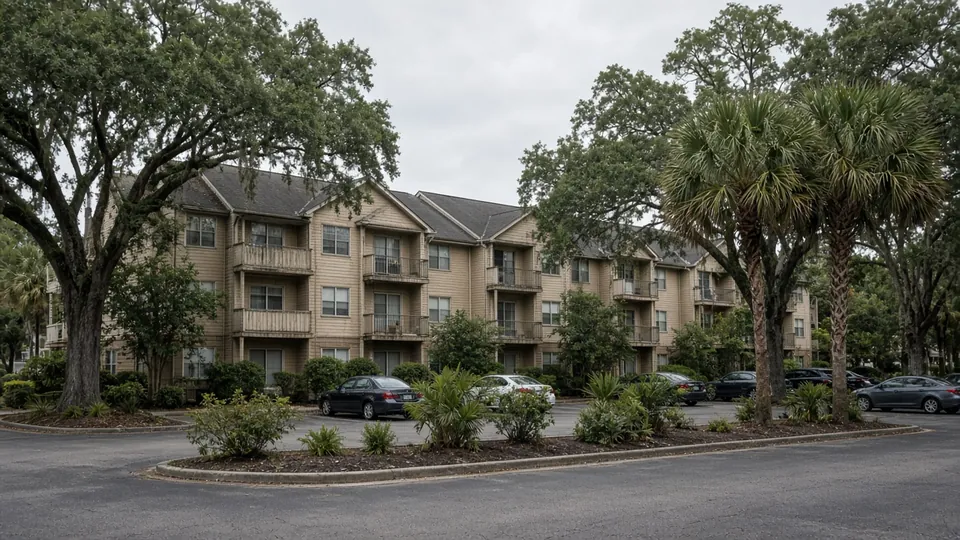
One recent North Florida example shows the kind of price gap these situations can involve. The Jax Daily Record's weekly list of top commercial sales reported that a 159-unit apartment community on 11.76 acres in Jacksonville sold for $19.6 million in sales recorded Oct. 26 to Nov. 1, 2026. It previously sold for $25.8 million in 2022, so the new price is about 24% lower. The buyer's entity name includes "REO." Public sale records do not explain why the price changed, and we do not know anything about this property's condition. The point is general: lower prices often come with less information.
Why is distress showing up now?
According to Trepp's October 2026 report, the CMBS delinquency rate was 8.09% for multifamily, 12.33% for office and 7.21% for retail, which jumped 63 basis points in a month. CMBS is only one part of the lending market, but it is a useful signal. When more loans fall behind, more properties end up with lenders and special servicers, and more of them come to market as distressed or bank-owned sales.
Why a lower price can hide condition problems
- As-is terms. Lenders and servicers usually did not operate the building and will not make repairs or offer the disclosures an owner-operator might.
- Deferred maintenance. An owner struggling with debt payments often cuts maintenance first. Roofs, HVAC units, paving and exterior repairs get pushed back.
- Missing records. Warranties, service records, permits and prior reports may be incomplete or gone.
- Vacant or down units. Empty units and spaces can hide leaks, mold-like growth, vandalism and disconnected equipment.
- Short timelines. Distressed sales often come with tight due diligence periods.
A discount is only a good deal if it is larger than the work the building needs.
What to check on a bank-owned apartment or commercial property
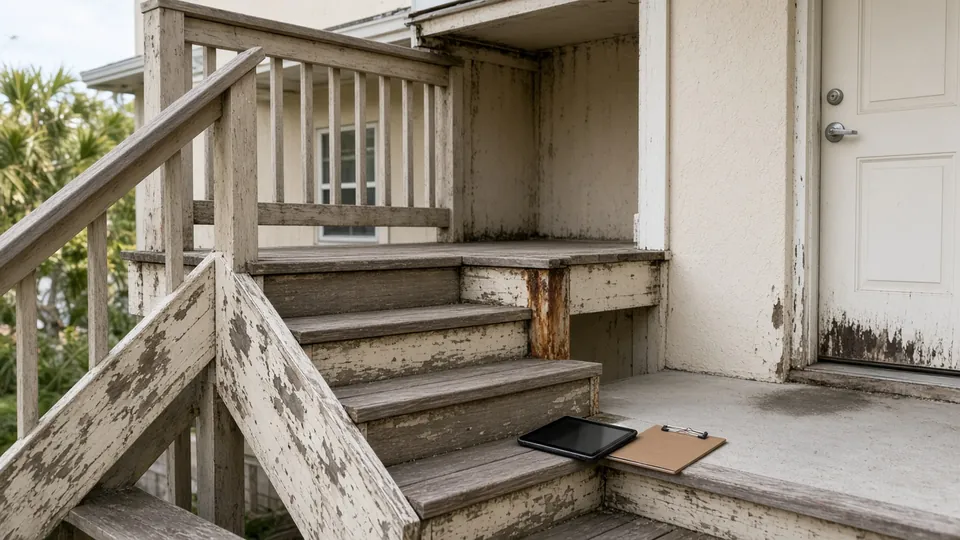
For multifamily, that usually means roofs, exterior stairs, balconies and breezeways, siding and stucco, a representative sample of units, water heaters and HVAC equipment, electrical panels, plumbing, paving and drainage. For office and retail buildings, focus on roofs and rooftop equipment, the building envelope, life-safety equipment, vacant suites and the parking lot. Ask the seller to have utilities on for the inspection; without power and water, many systems cannot be evaluated.
It is also smart to check with the local building department for open permits or code enforcement cases. That records search is separate from a physical inspection.
How a PCA and Phase I ESA help you price the risk
Property Condition Assessment
Our Scope 4 — Property Condition Assessment includes a full commercial building inspection, available document review and interviews, opinions of probable cost for immediate repair concerns, a ten-year capital reserve outlook, a detailed accessibility review of visible and applicable measurable elements, an executive summary and a prioritized deficiency list. For a distressed purchase, that turns "as-is" into a list of what needs attention and what it may cost. Cost figures are planning-level opinions, not contractor bids. The right scope depends on the property, the deal and your goals; we'll help you choose.
Phase I Environmental Site Assessment
A Phase I Environmental Site Assessment (ASTM E1527-21) evaluates potential environmental concerns associated with the property and its history. Lenders often require one, and it matters even more when the seller has little first-hand knowledge of the site. We coordinate Phase I assessments with our environmental partner, which prepares the environmental report, and it is quoted separately.
A checklist for bank-owned and distressed purchases
- Ask the seller for every record available: prior inspection reports, roof and HVAC records, permits, rent rolls and utility bills.
- Book the PCA and Phase I as soon as the contract is signed. Most commercial inspection reports arrive within 3–5 business days after the inspection; detailed PCAs and larger properties can take longer.
- Arrange utilities and access to vacant units, roofs and mechanical rooms.
- Get contractor pricing on the largest items before your due diligence period ends.
- Compare the total cost of needed work with the discount you are getting.
Our team inspects multifamily properties and other commercial buildings across Jacksonville, St. Augustine, Tallahassee, Gainesville, Ocala, Lake City and throughout Florida, Georgia and Alabama. If you plan to refinance after buying, see why to find repair costs before the lender does.
Frequently asked questions
What does REO mean in commercial real estate?
REO stands for real estate owned. It refers to property a lender has taken back, usually through foreclosure or a deed in lieu of foreclosure, and then typically sells to a new owner.
Are bank-owned commercial properties sold as-is?
Usually, yes. Lenders and servicers generally did not operate the property, so they rarely make repairs or provide the disclosures an owner-operator might. That makes your own inspection more important.
What inspection should I get before buying a bank-owned property?
A Property Condition Assessment documents condition, immediate repair cost opinions and a ten-year capital reserve outlook. A Phase I Environmental Site Assessment covers environmental risk. A records search for open permits and code cases is also wise.
Does a lower purchase price mean a better deal?
Not necessarily. A discount is only a good deal if it is larger than the cost of the work the building needs. Condition findings and contractor pricing help you compare the two.
Do you inspect apartment communities in Jacksonville?
Yes. We inspect multifamily and other commercial properties in Jacksonville, St. Augustine, Tallahassee, Gainesville, Ocala, Lake City and throughout Florida, Georgia and Alabama.
Looking at a bank-owned or distressed property? Send us the property type, size and your due diligence deadline, and we'll put together a proposal for a PCA, Phase I or both.
Sources
- Jax Daily Record, “Top commercial sales of the week,” Nov. 5, 2026
- Trepp, “CMBS Delinquency Rate Drops 15 Basis Points in October 2026,” Nov. 2, 2026
Images in this article are AI-generated illustrations, not actual High Mark inspections or client properties. This article is general information and does not replace the written scope in your inspection agreement.